
Containment and negative air
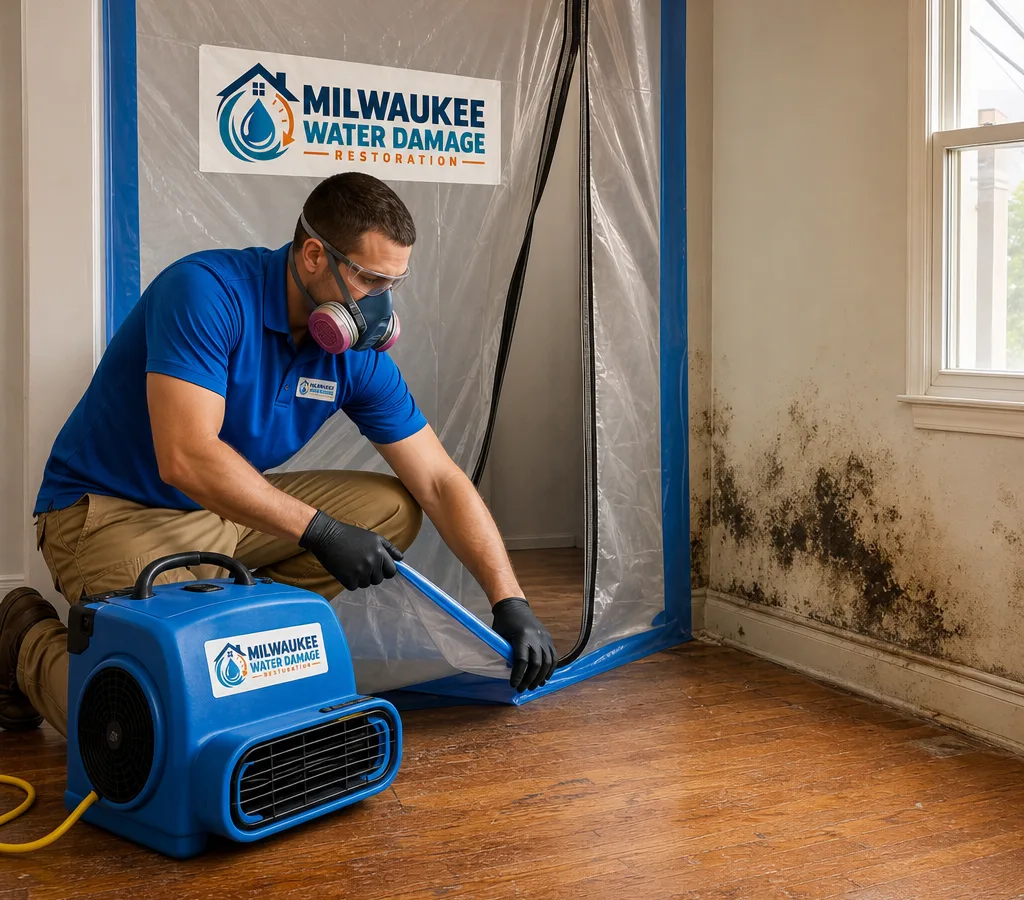
We isolate the work area with poly sheeting and use HEPA-filtered negative air to limit cross-contamination into living areas, hallways, and HVAC returns.
Serving Milwaukee & surrounding areas
24/7 Emergency Response
Mold Removal • Milwaukee, Wisconsin
Stop the spread, protect your indoor air, and get a clear plan for safe containment, removal, and repairs after leaks or flooding.
✓Containment
✓Negative air
✓HEPA cleaning
✓Written scope
Source Control Comes First
If you are searching for mold removal Milwaukee homeowners can trust, start with one fact: mold is usually a moisture problem first, and a cleaning problem second. A surface wipe-down may make a spot look better, but it will not fix what caused it or keep spores from spreading through the house.
Milwaukee Water Damage Restoration handles mold cleanup with a containment-first approach, then removes affected materials, cleans and treats remaining surfaces, and gets the space dry enough to stay that way. We work in older housing common around Milwaukee where basements, rim joists, and enclosed wall cavities can hold moisture after a plumbing leak, a roof issue, or a sewer backflow.
You will get a written scope of work, what we found, what we are removing, and what needs to be repaired or monitored. If the mold started after a leak or flood, it often helps to coordinate mold work with water damage restoration so the drying and repairs support the long-term fix.
Controlled Remediation Scope
We isolate the work area with poly sheeting and use HEPA-filtered negative air to limit cross-contamination into living areas, hallways, and HVAC returns.
Air scrubbing plus HEPA vacuuming captures fine particles; hard surfaces are cleaned and treated based on the material and extent of growth.
Drywall, insulation, carpet pad, and other porous materials that cannot be reliably cleaned are removed to reach clean, sound substrates.
We check for damp building materials and hidden wet areas so the cleanup does not stop at what you can see.
You get a scope you can understand: areas affected, containment plan, removal steps, and what comes next for reconstruction or finishes.
Hidden Moisture Pathways
Mold growth patterns often point to where moisture is entering or getting trapped.
No matter the location, the goal is the same: remove contaminated materials safely, clean what can be saved, and fix the moisture conditions so mold does not return.

Contained, Cleaned, and Dry
Each project follows a controlled sequence built around moisture identification, containment, safe material handling, detailed cleaning, and practical repair planning.
Assessment
We look for visible growth and use moisture checks to identify wet materials, likely pathways, and areas that need to be opened for confirmation.
Containment
We define the affected area, set up containment and negative air when appropriate, and protect nearby rooms and contents.
Removal
Porous or heavily impacted materials are removed in a controlled way. Debris is bagged and handled to reduce spore spread.
Cleaning
We HEPA vacuum and clean remaining framing, masonry, and other surfaces. Treatments are chosen based on substrate and condition, not a one-size-fits-all spray.
Next Steps
We confirm drying directionally and outline what repairs or rebuild steps are needed so the space can be put back into service safely.
Clear Pricing Factors
Mold removal in Milwaukee typically ranges from about $1,000 to $6,000 for most residential projects, with small, contained areas sometimes closer to $500 to $1,500 and larger multi-room or basement jobs reaching $8,000+ when demolition and rebuild prep are significant.
Pricing depends on the size of the affected area, how much porous material must be removed, access in an attic, crawlspace, or behind cabinetry, the required containment level, and whether active moisture or water damage is present. The exact cost is confirmed after an on-site inspection and a written scope.
Request Emergency ServicePractical Answers
Most mold removal projects take 1 to 3 days for containment, removal, and cleaning, then additional time if drying or rebuild work is needed. A single small area may be completed in a day, while a basement with multiple affected sections can take several days because materials must be removed, cleaned, and dried before repairs make sense.
Often you can stay home if the work area is fully contained and there is a safe path in and out of the affected zone, but it depends on the location and extent. If the mold is in a main living area, near bedrooms, or involves large-scale demolition, it may be more comfortable to be out during the dirtiest phases of removal and cleanup.
Sometimes, yes, but only when the mold is truly on a cleanable surface and the underlying materials are dry and sound. If drywall is water-damaged, soft, or mold is inside the wall cavity, selective removal is usually the safest way to stop recurrence and confirm the framing is clean.
Bleach can discolor and may reduce mold on non-porous surfaces, but it is not a reliable fix for porous materials like drywall, wood, or concrete where moisture can remain. Professional remediation focuses on controlled removal, HEPA cleaning, and correcting the moisture source so the problem does not come back.
Sampling can be useful in some situations, but many jobs do not require lab testing to proceed because visible growth plus moisture evidence already supports a remediation plan. If you want testing for documentation or a sensitive-occupant situation, we can discuss when it helps and how it fits into the scope and budget.
Avoid disturbing the area and do not run fans that could blow spores into other rooms. If possible, keep doors to the affected space closed, clear a small work path, and note any recent leaks, odors, or humidity issues so we can target the source quickly.
Start With an On-Site Assessment
Tell us what you are seeing and where it is in the building. We will inspect the area, explain what needs to be removed versus cleaned, and provide a written scope with straightforward next steps for your Milwaukee property.