
Basements and Crawlspaces
Below-grade spaces can stay humid, especially after seepage, condensation on cold surfaces, or long-term dehumidifier failures. We focus on drying, cleaning, and stopping recurring moisture.
Serving Milwaukee & surrounding areas
24/7 Emergency Response
Mold Remediation • Milwaukee, Wisconsin
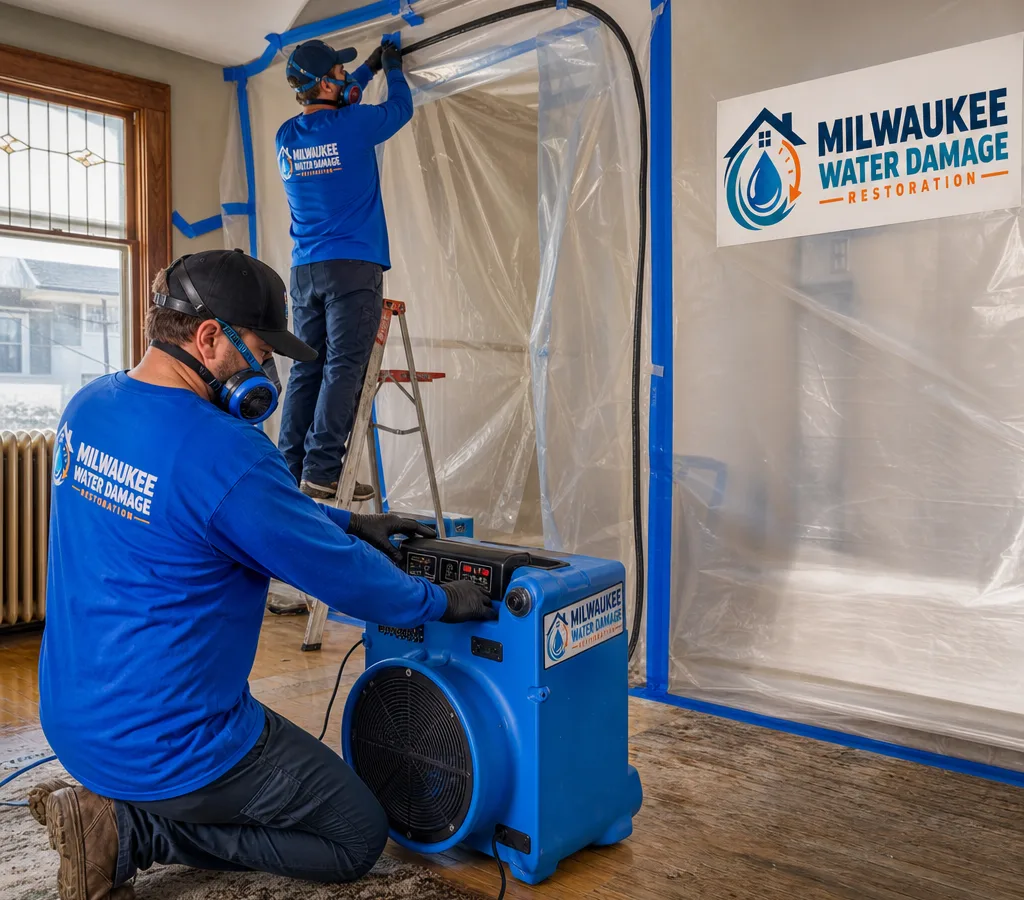
Stop mold at the source with containment, HEPA filtration, and detailed cleaning that protects your indoor air and helps prevent regrowth.
✓Containment
✓HEPA filtration
✓Detailed cleaning
✓Drying confirmation
Source Control Comes First
Milwaukee mold remediation should do two things well: remove existing growth safely and correct the conditions that let it come back.
Mold often follows moisture problems like leaks, humid basements, wet drywall, or poorly vented bathrooms. If cleanup only treats what you can see, spores and damp materials can keep the issue active behind walls or under flooring.
Our team approaches remediation as a controlled work process: isolate the affected area, filter the air, remove or clean impacted materials, and verify the space is clean and dry before normal use resumes. This matters in Milwaukee’s mix of older housing and commercial spaces, where basements, plaster, and layered renovations can hide moisture pathways.
If the problem began with a moisture event, materials may need to be dried and stabilized before remediation is finalized.
Controlled Remediation Scope
A real remediation plan is more than spraying a surface. The goal is to keep spores from spreading while the source and affected materials are handled.
When a space has a musty odor but no visible growth, we begin with a moisture and air-quality investigation—not a guess. That keeps the scope accurate and helps prevent unnecessary tear-out.
Where Mold Hides
Below-grade spaces can stay humid, especially after seepage, condensation on cold surfaces, or long-term dehumidifier failures. We focus on drying, cleaning, and stopping recurring moisture.
Poor ventilation and warm, moist air rising into the attic can cause mold on sheathing and framing. Containment and careful cleaning protect the rest of the home from spore spread.
Chronic high humidity, slow exhaust fans, and small leaks around tubs, showers, and supply lines can keep drywall and trim damp. Remediation often includes venting and moisture corrections.
Slow leaks can feed hidden growth for months. We use moisture findings to target openings, remove impacted porous materials, and clean remaining framing and substrates.
Shared walls and continuous HVAC operation require stronger containment planning, scheduling, and coordination so occupants and neighboring tenants are protected.
Contained, Cleaned, and Dry
The sequence is tailored to the property, but each project is built around controlled air, safe material handling, detailed cleaning, and moisture correction.
Assessment
We identify affected areas, likely moisture sources, and impacted materials. You receive a practical plan covering removal, cleaning, drying, and repairs needed to help prevent return growth.
Containment
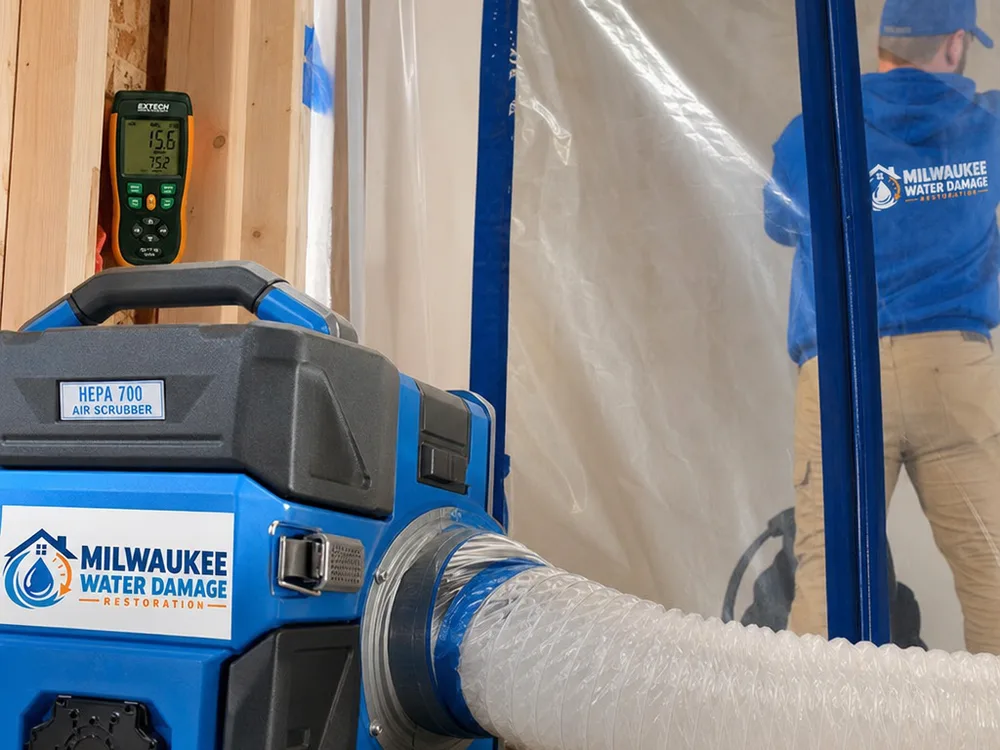
We isolate the work zone with plastic barriers and use HEPA filtration, often with negative air, so spores remain within the controlled area while work is underway.
Removal
When drywall, insulation, carpet pad, or other porous items are colonized, they are typically removed and bagged out using safe handling practices.
Cleaning
Remaining structural surfaces are HEPA vacuumed and cleaned in detail. Antimicrobial products are applied when appropriate for the material and conditions—not as a one-size-fits-all step.
Verification
We verify the space is dry enough to close back up, then complete a final HEPA pass and wipe-down before containment is removed. When post-remediation verification testing is requested, timing is planned so results are meaningful.
Clear Pricing Factors
Most Milwaukee mold remediation projects typically range from about $1,200 to $6,500, with small, contained areas often landing closer to $1,200 to $2,500 and larger multi-room or hidden-growth projects running $4,000 to $10,000+.
Final pricing depends on the size of the affected area, how much porous material must be removed, access in attics or tight basements, containment level, and whether drying and odor control are needed. Exact cost is confirmed after an on-site inspection and written scope.
Request Emergency ServiceField Documentation
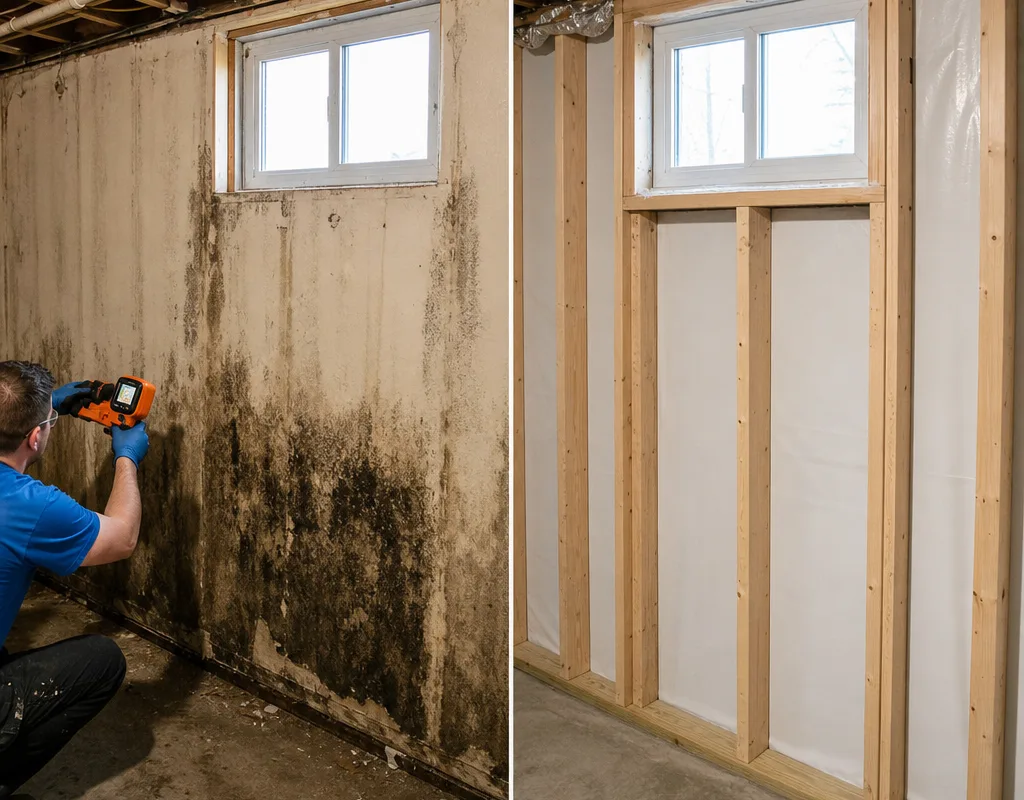
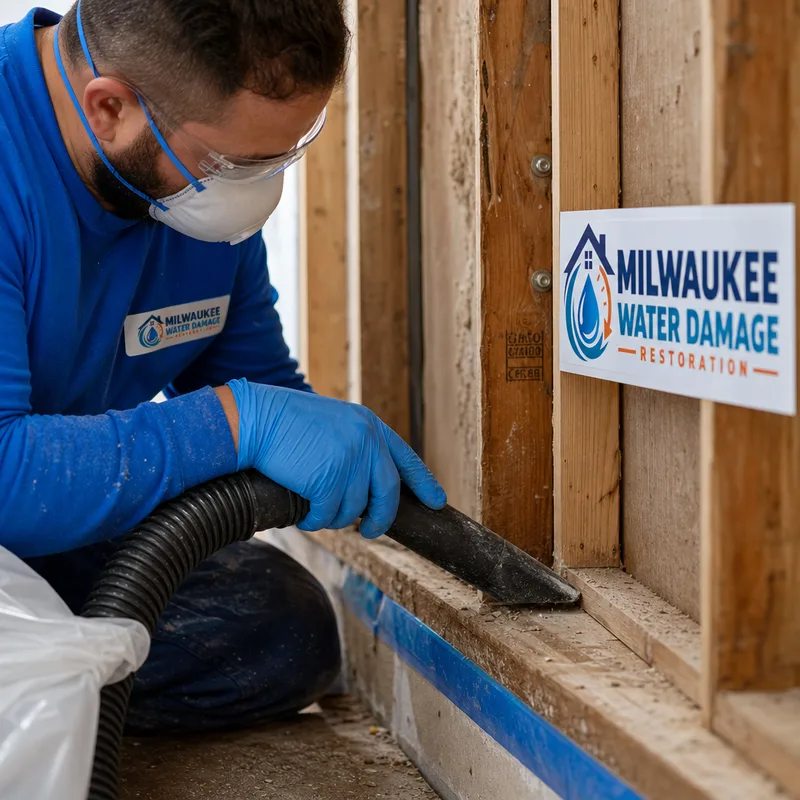
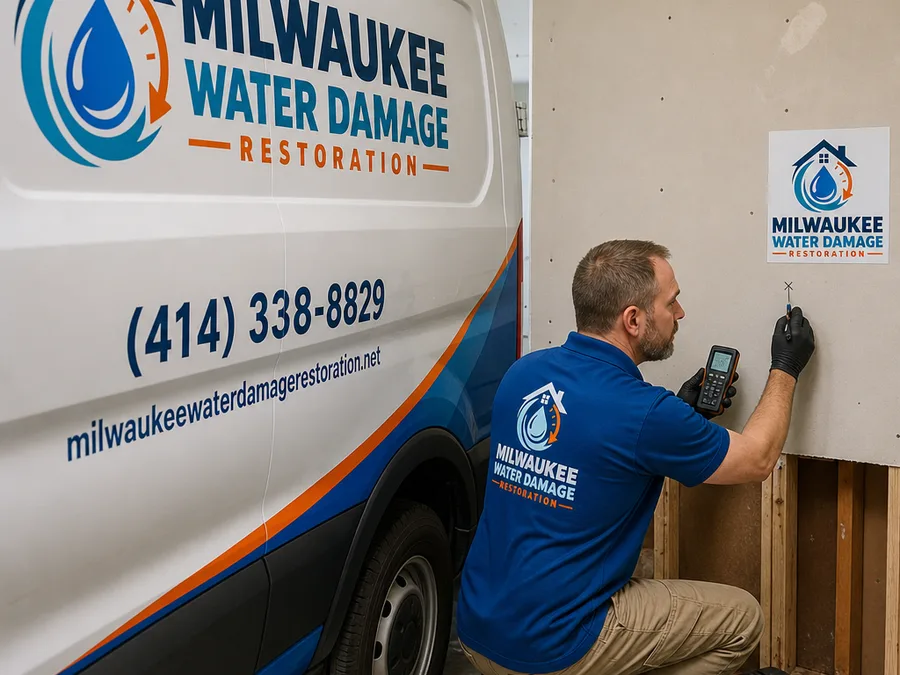
If you’re dealing with a musty odor, visible growth, or a recent leak, get an on-site assessment before cleaning or opening materials. A clear scope helps prevent spore spread and keeps the repair plan realistic.
Call for Emergency HelpPractical Answers
Most projects take 1 to 3 days for contained areas, while larger or multi-room remediation can take 3 to 7 days, depending on removal needs and drying time. Basements and attics can extend timelines because airflow and access slow both cleaning and moisture correction.
Often yes if the affected area can be fully contained and isolated, but it depends on where the mold is and who lives in the home. If growth is near primary living spaces, or anyone has respiratory sensitivities, we’ll discuss temporary separation of the work zone or short-term relocation during the highest-disturbance phases.
Remediation focuses on safe removal and cleaning, but the moisture source must be corrected for the result to last. If the issue stems from a recent leak or flooding, the project may start with stabilization and drying, then proceed into remediation once materials are confirmed dry enough to close back up.
Porous materials that are colonized are typically removed because they cannot be reliably cleaned all the way through. We isolate the area, remove and bag the material, then HEPA clean and wipe remaining framing and substrates before rebuild work begins.
Yes, PRV can be arranged when it’s needed for peace of mind, documentation, or a third-party requirement. Testing is most useful after final cleaning and after the area has been dried and allowed to settle, so results reflect normal conditions rather than active work.
Limit disturbance, avoid running fans that blow directly across visible growth, and keep doors to the area closed if possible. Take a few photos for documentation, then get an assessment so the moisture source and true extent—including hidden areas—can be confirmed before cleanup attempts spread spores.
Start With an On-Site Assessment
Tell us what you’re seeing and where it’s showing up. We’ll inspect the area, explain the containment and cleanup steps, and provide a clear scope so you can move forward with safer indoor air and a lasting fix.